In the midst of the revanchist moment that we’re experiencing right now, many on the left have begun thinking about what the future backlash to the backlash might hold. I think this could be fun to do, so today let’s think a bit about what a left-populist backlash to the current moment might look like.
Anatomy of “woke”
First, I want to talk a bit about “woke” as a term and descriptor. Most folks know that the term has roots in the Black American activist tradition, where folks were instructed to stay “woke,” or awake to/aware of, prejudices present in everyday society. It had been a part of Black vernacular since at least the 1940s, growing in prominence alongside the burgeoning civil rights movement. The term never really fell out of usage from that point — Black folks continued to use it amongst ourselves to indicate our understanding and awareness of the forces against which we were beset.
Modern usage began raising in 2014 around the time of the Ferguson uprising. As racial justice activists took to the streets declaring that Black lives matter, they also warned fellow travelers on the road towards justice to “stay woke.” This usage crested in 2020 as the murder of George Floyd brought billions of folks into the fold. It was perhaps inevitable at this point that, as white people unaware of the history of “woke” as a term began coming into the movement, that the term’s meaning would shift. It stopped being simply an act that one performed — one no longer just “stayed woke” or “got woke.” Instead, it became something that someone could be. Placidity replaced action. “Woke” was transfigured into a moral position to occupy instead of a form of vigilance to be practiced.
Then, once the Right got its hands on it, woke became synecdoche for the broader cultural Left and its ambitions. The very presence of Black people, of queer people, or of women in any space became “wokeness.”
This linguistic shift is depressing. It demonstrates the ways in which the Right is adept at shaping and deforming culture, all while pretending that they are not doing it. For all the ink and noise about the Left’s cultural dominance and the ways in which it is indoctrinating kids and inculcating dangerous ideas into the body politic, the astroturfed backlash to “woke” as a term and as a representation of inclusive politics shows that it’s actually the conservatives who run the dominant culture.
But anyone who’s read Chomsky or who observed America’s media landscape post-9/11 already knew that.
I say all this to say that I am, grudgingly at least, adopting the Right’s definition of “woke” here. When I talk about “Woke 2.0,” I’m not simply talking about a heightened social awareness of oppression. I’m talking about a societal shift towards liberal-left cultural values, a liberal-left takeover of attendant cultural and political institutions, and of a broader shift in social mores.
If Black Lives Matter and #MeToo and internet feminism were all evidence of a shift towards Woke, then what will the future shift look like? What should it look like?
The audacity of “woke”
First, I think we should set out the values in which Woke 2.0 will be rooted. If Woke 1.0 was rooted in part in a broader awareness of the plight of Black Americans and of working women, then I think the next iteration will be rooted in these struggles.
- The struggle for Palestinian statehood and an end to Israeli apartheid
- An embrace of democracy not just in politics but in the workplace
- Trans rights and immigrant rights
- Anti-monopoly and a rejection of Big Tech
I think it’s pretty clear from the past three years that the issue of Palestinian rights has taken on new salience. Israel’s genocide in Gaza has created a new generation of anti-Zionists the world over, and recognition of the Palestinian state has reached new heights. As Y.L. Al-Sheikh notes in a new piece in The Nation, “the pro-Israel consensus has evaporated among the Democratic and liberal base. Not only that—being uncritical of Israel and its regime of control over Palestinians today is becoming an impediment to Democratic politicians.”
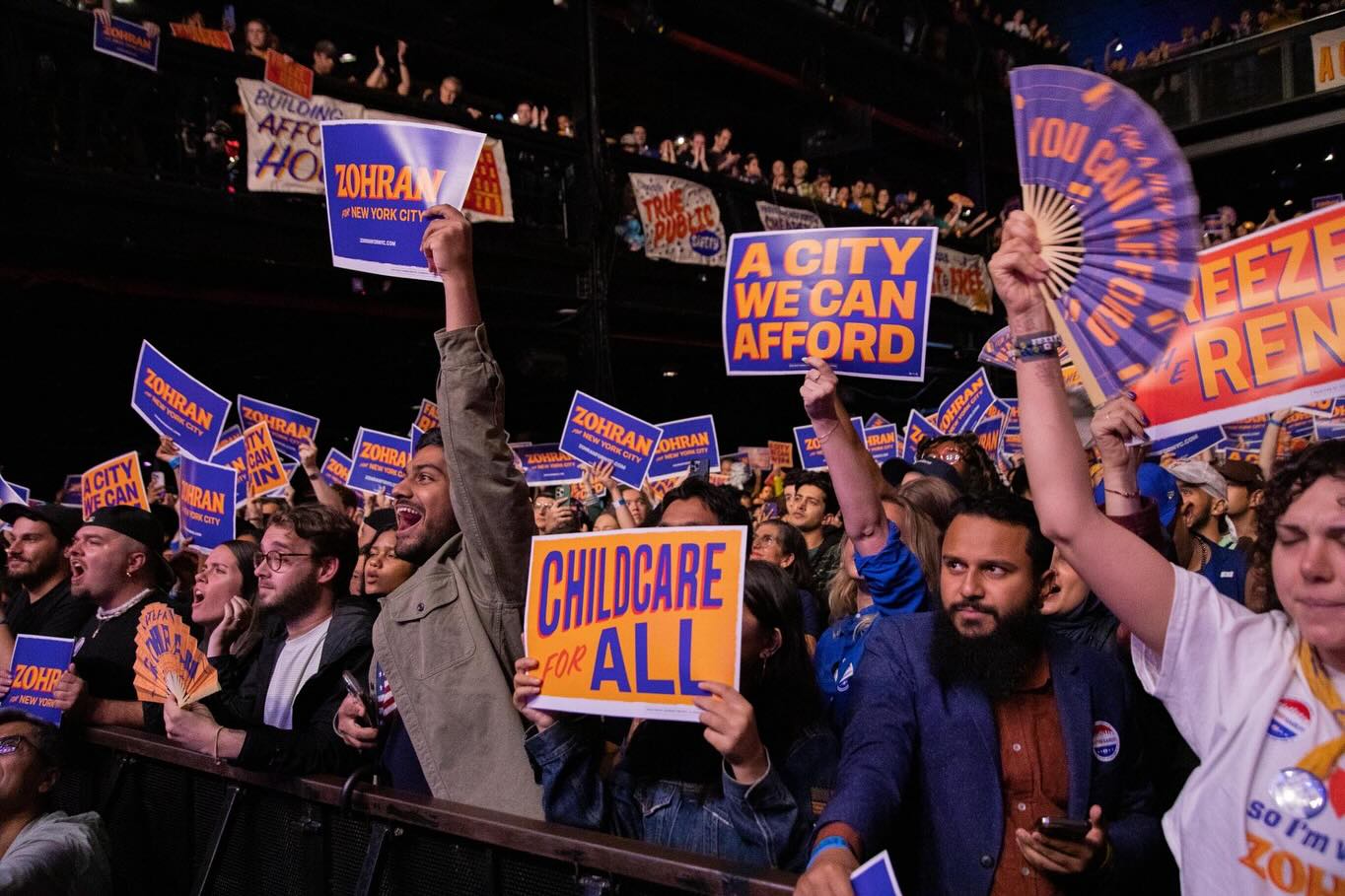
Zohran Mamdani’s success in the 2025 New York City mayoral race and Kamala Harris’s shock loss in the 2024 presidential election illustrate the shift on this. Mamdani, long considered a long shot, was able to win decisively without ceding much, if any, ground on his anti-Zionism. This is in spite of the fact that Jewish New Yorkers make up a huge part of the electorate. Mamdani actually is winning among Jewish New Yorkers, despite his insistence that Israel should not exist as a Jewish apartheid state. Barring an epochal upset, Mamdani is on track to win in the general election by nearly 20 points, a margin that dwarfs incumbent Eric Adams’s 2021 win.
Kamala Harris, on the other hand, took what was a fairly durable lead (the first polls of Harris v. Trump had Harris outperforming Biden and holding a slight lead, that lead grew as excitement built for her candidacy)and turned it into a small, but meaningful loss.
Much of this can be attributed to her staying in lockstep with unpopular incumbent Joe Biden on Gaza, a position which lost her Muslim voters in key swing states and young voters who were already disillusioned with politics as usual.
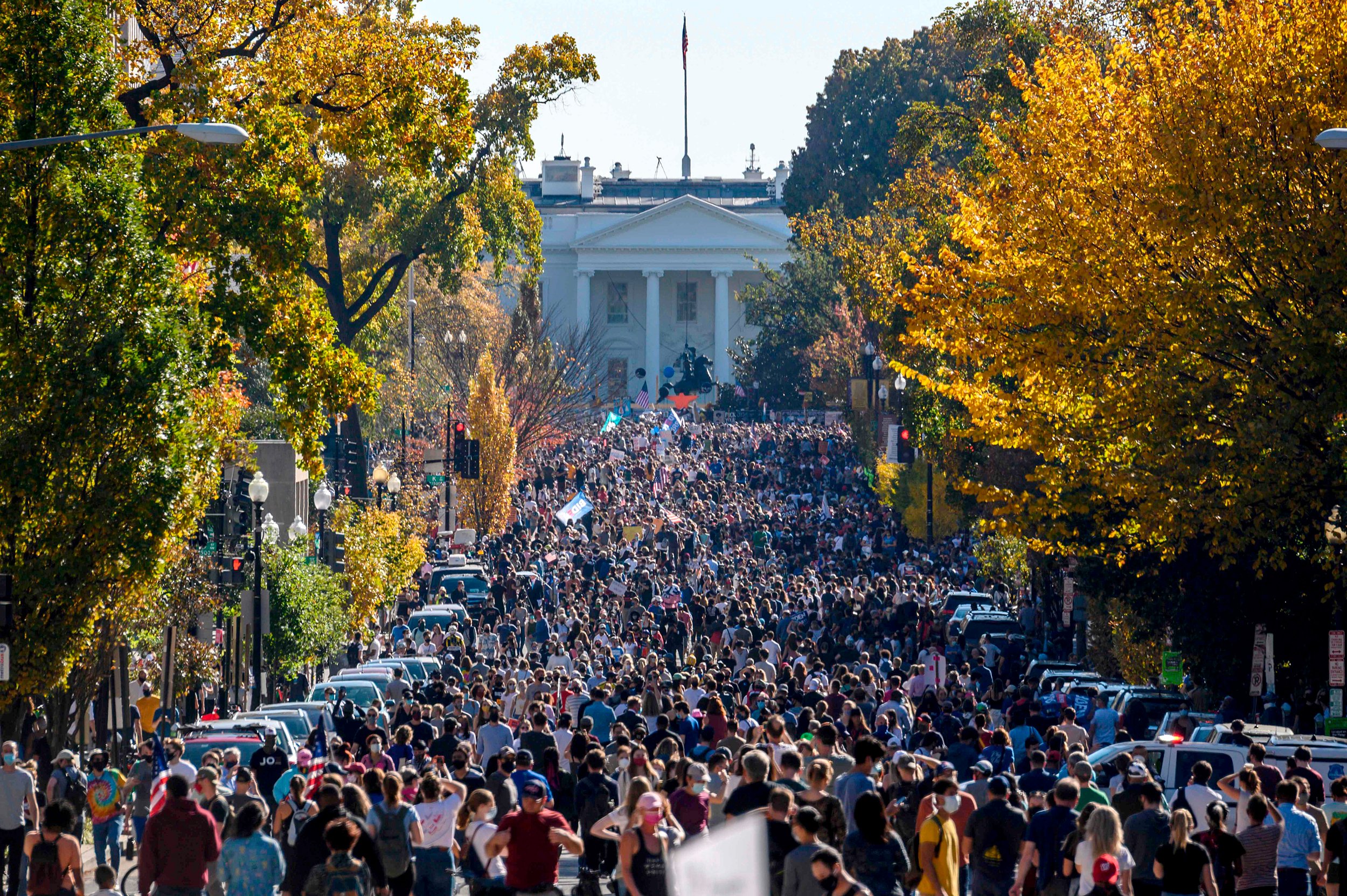
Second, the broader embrace of democracy as a governing principle is perhaps the most obvious of these new Woke tenets. The No Kings protests, some of the largest in American history, are all centered around the idea that representative democracy is a valuable thing that should be protected and expanded. While these protests haven’t yet turned into something like a general strike, there have been whispers of one on the air for some time. Unionization drives are ripping through the tech sector as the VC-backed embrace of AI threatens once-secure positions and freezes hiring. In the world of media, the billionaire class’s embrace of the Trump regime has led many to look to unionization for independence or job security, and it has been unions like the National Treasury Employees Union (NTEU) that have most forcefully and successfully used the legal system to push back against Trump and his gutting of the federal government.
As the backlash to this revanchist moment grows, I fully expect that workplace democracy will be at the center of any movement or power-building that occurs. As it should be.
Third, I think that the Right has overplayed its hand on trans rights and an attendant backlash is brewing. In 2014, the public opinion on trans rights was pretty favorable and improving – a UCLA study from 2014 shows that while public opinions towards trans people was less favorable than it was towards gay and lesbian people, it had still improved by 40% since 2005. The Obama administration, whose civil rights record is thin but laudable, took major steps to protect trans people under Title IX.
The conservative reaction to this since 2016 has been an onslaught of vile, untrue garbage meant to portray trans people as uniquely dangerous or deviant. Trans-exclusionary radical feminists (TERFs) used the burgeoning feminist wave of the 2010s as a trojan horse to launder their bigotry, seeking to drape it in the language of protecting women. This, unfortunately, worked — public opinion on trans rights backslide and now even allegedly liberals like Keir Starmer’s Labour government are taking actions against trans people.
This might seem like good politics now. Scapegoating trans people allows weak-willed politicians a way of pretending like they are reasonable, that they are not radical, or that they are not of-a-piece with the broader Left. Some in the center-left have decided that trans rights are just too divisive, too hard to win, and that the broader Left should put them to the side in favor of more winnable issues (like killing Palestinian kids or gutting the social safety net in the name of bipartisanship).
This is, of course, a fool’s errand. Ceding even minimal ground to the Right on this issue has only opened the door to an even larger attack on queer people writ-large. Seeing no resistance to their war on trans people, the Right now seeks to repeal marriage equality, undo conversion therapy bans, and force millions of queer people into lives of misery, shame, or hiding.
No one in their right mind wants this. Anyone of conscience can see that the Right’s efforts to essentially genocide queer people are just part of a larger project wherein they get rid of “undesirable” people. The Right’s mission isn’t just to erase trans people, it’s to erase Black and brown people, immigrants, and any woman who dares to seek a life beyond domesticity and servitude. The queer right’s struggle is inextricably linked to the immigrant struggle and to the racial justice struggle in that the driving force behind the oppression of all of them is an attempt by those in power to wipe the land clean of all people who aren’t straight, white, Christian, neurotypical, or committed to the same dying principles that animate modern conservatism.
If the genocide in Gaza has opened the eyes of millions to the deeply cruel and unethical ways in which America and its vassal states conduct themselves internationally, then the Trump-era shakedowns and kidnappings of immigrants and dissidents similarly serves as a wake-up call to the cruelty and inscrutability of our immigration system and our rigid caste citizenship system. And by that same token, the genocide against trans people is a vivid demonstration of the cruelty with which the Right seeks to enforce social and ideological conformity.
Lastly, the Big Tech backlash. One of the interesting hallmarks of the 2010s was the Left’s embrace of tech utopianism. Barack Obama handing billions of dollars to Elon Musk to privatize America’s space program; the Clinton campaign’s liberal usage of social media in lieu of traditional organizing and campaigning. There was a real sense that Silicon Valley had the best interests of the world in mind and that technology was the perfect solution to any problem. This, of course, changed in 2016 when Facebook and other social media sites privileged the Trump campaign and worked with them to promote Trump and harm Clinton. As the liberal establishment soured on Big Tech, so too did the public. Social media took up more and more of people’s lives, eroding trust in institutions and creating a slew of mental health issues for its users. The COVID-19 pandemic brought this into stark relief as millions were confined to their homes with nothing but the feed to keep them connected to others.
The Big Tech backlash also comes as many aspects of culture have been eviscerated by tech’s growing influence. Musicians, already struggling to eek out a living, have seen their livelihoods destroyed as meager streaming revenues and AI slop have reduced their checks to nothing. It doesn’t help that Spotify, the dominant music streaming app, is now actively promoting the genocide of Palestinians and the mass deportation of immigrants and dissidents. For artists, the AI bubble has resulted in their work being stolen and their opportunities drying up; for blue collar workers the world over, the looming specter of automation has hung like a sword of Damocles for at least a generation.
In almost every area of people’s lives that tech touches, the result has been harmful. The utopian promise of connection, of movement building, of creating new knowledge, has been killed by the profit motive. It is a tale as old as capitalism.
There is, however, hope that the tide can be turned. This hope has largely manifested in the neo-Brandeisian anti-trust movement. Led by regulators like Lina Khan and Jonathan Kanter, the basic argument is simple and intuitive: tech companies have become too big, and their market dominance has allowed them to enshittify. They are able to ruin lives, decimate industry, and skirt regulation because they have made themselves central to people’s lives and to industry. The solution is to break them up, to encourage competition, and to heavily regulate their markets so that no one can ever again amass the kind of power that entities like Amazon, Google, Meta, Microsoft, or Oracle have.
There’s a certain populist appeal to this, and it has already begun gaining traction amongst liberal-Left politicians and the broader public. Even Kamala Harris, not exactly known for her concrete or daring policy stances, made anti-monopoly enforcement a cornerstone of her 2024 economic agenda.
I want to believe that these tenets/political ideas will animate the coming backlash to the backlash. In some ways, it already is — the anti-war/pro-Palestinian movement has created a new awareness of international law that almost certainly increased the political salience of Pete Hegseth’s double-tap war crimes. The drive towards democracy at all levels — a rebuke not just of Trump’s authoritarianism but of the dominance of billionaires and capitalists in public life — has been the glue that’s held the massive No Kings protests together. The ICE raids have made major immigration reform and the abolition of ICE into core pieces of any post-Trump legislative agenda for the left, and the anti-monopoly agenda is the one resilient part of Bidenomics. This was made particularly clear by the near-universal embrace of “affordability” in the most recent elections and by New York Mayor-elect Zohran Mamdani’s embrace of former FTC Chair Lina Khan, who championed the most effective federal anti-trust enforcement in a century. The pieces are all beginning to add up, and the coming future is somewhat bright.