Tag: hauntology

  • I’m sick of pretending like the law is real or good

    I’m sick of pretending like the law is real or good

    Hello there.

    It’s been a hot minute since I wrote anything here. That absence wasn’t exactly intentional, and in the time since I put out the masculinity post I’ve been batting around a ton of ideas for posts here, including blogs about my recent trips to Thailand and Grenada (my savings will never recover, but who gives a fuck), posts about the new yeule, Julia Wolf, and Lorde albums, and something about being gay and doing internet crime (I was really excited to call it “Pride and Piracy” or something).

    But none of those posts materialized for two primary reasons. First, I’ve started a new job as a direct services attorney, serving mostly poor people facing eviction or subsidy termination. I’m managing a pretty big (and growing) case load and many of my clients are facing not just their particular case but also other forms of precarity. Doing right by them has meant devoting less time to hobbies and side projects.

    The second reason is a bit more pointed: none of the above post ideas seem to speak to the moment that we’re living in. It feels really weird and out-of-touch to write some academic post about Grenada’s failed socialist revolution or how various pop stars handle femininity when the U.S. government is dumping money into a homegrown Gestapo with the express purpose of disappearing dissident brown people. How can I write lovingly about an imagined past of internet freedom when the last vestiges of that past are being torched by a right-wing revanchist court?

    A sunset in St. Georges, Grenada.

    At the risk of sounding like a parody of myself, the problem is that my hauntological preoccupation with communicating with the ghosts of the past has crashed against the reality that the present and future are horrible. No level of navelgazing or historical adventurism can beat back the simple fact that the revolutions all failed and the pregnant possibility of the past ended in miscarriage. The lessons we can actually glean from the past are fairly straightforward if we’re willing to listen to them — Grenada’s March 13 Revolution succeeded in mobilizing working class discontent and Black Power sentiment, but was quashed by global capital. A tale as old as time. The present in Grenada is one of malaise, where there’s little memory of or hope for upheaval. I don’t need to write a book to tell you that, at a moment of revolutionary possibility, capital stopped pretending to be human and started killing everyone.

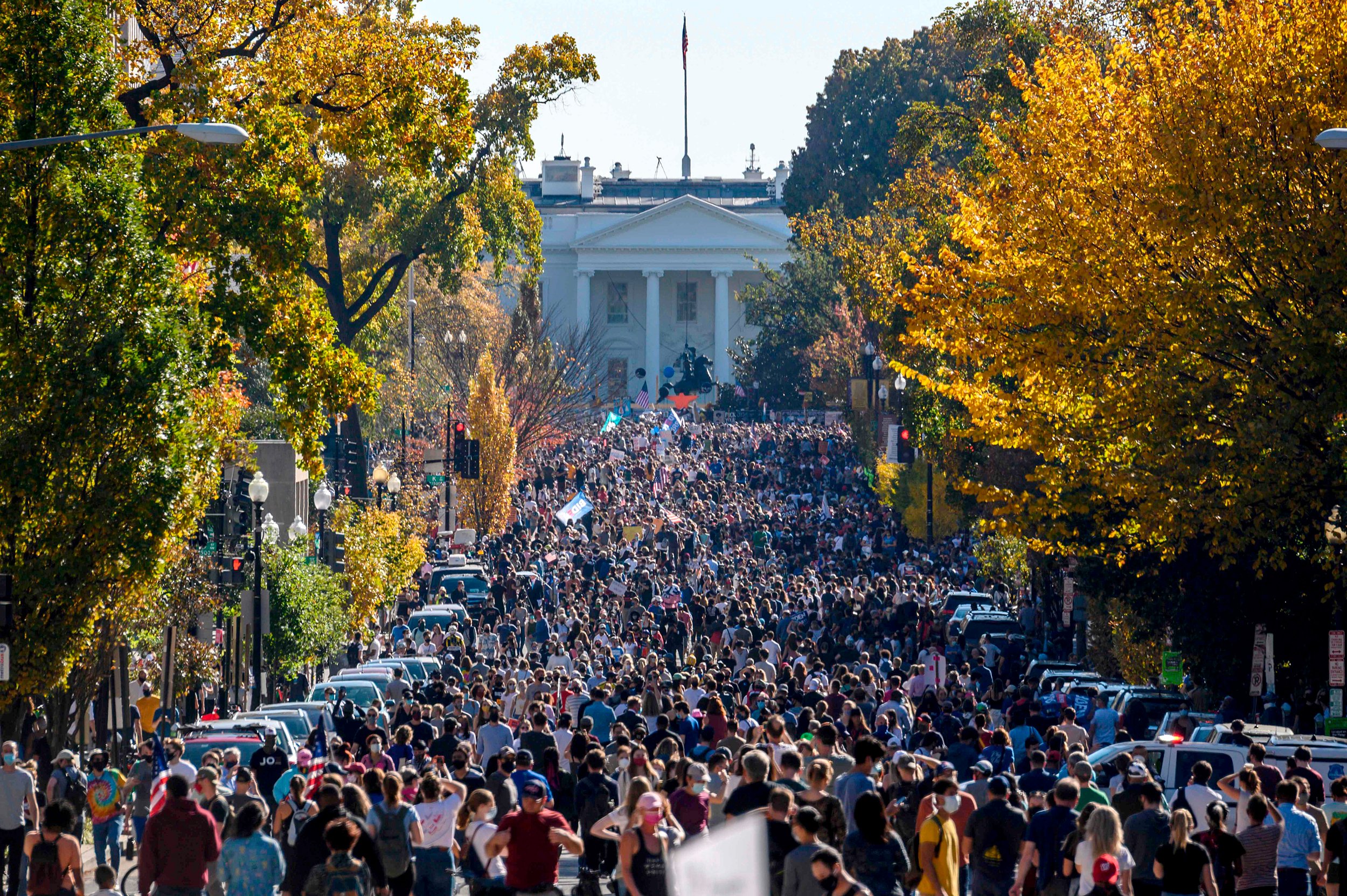
    Here, in the U.S., we’re “celebrating” Independence Day, which is supposed to be a love letter to our revolutionary spirit, our divinely ordained destiny, and our freedom-loving lineage. However, not since the eve of the Civil War have these ideals felt so out of touch and anachronistic. A country that is sitting on its laurels as a corrupt kleptocrat seizes god-like powers cannot lay claim to a revolutionary heritage. A country that treats its poor like grist for the mill is not God-fearing or adherent to any religious principle. And a country building concentration camps and financing a secret police cannot call itself freedom-loving.

    The recent fascist turn by the United States is not exactly surprising — Trump and Co. told us they’d do this in Project 2025 — but one of the things that’s been especially demoralizing to me is seeing in such stark relief the limits and inutility of the law. When the administration blatantly violates the Constitution, the Court will simply kneecap the courts’ ability to enforce it. When the administration defies court orders and nakedly breaks the law, the courts will slow-walk sanctions in fear of actualizing a crisis that is already here. All of this amounts to a legal system that will do anything to accommodate this dictator and his apparatchiks, even when it denigrates their power and makes a mockery of their stations.

    Contrast this with the legal system that my clients encounter every day. If a poor person misses a court date (like the administration did earlier this year), they get a default judgment and their ability to litigate their case is severely curtailed. They’re basically screwed absent dramatic measures that are largely at the discretion of a judge (judges, of course, have little sympathy for poor people. All of it is reserved for multinational corporations and fascists, apparently). The letter of the law, with its deadlines, mandates, and edicts, is very real for poor people, for marginal people of all stripes.

    It is not real for the very folks who should be most constrained by it.

    This contrast is not new — leftists and liberals have been railing against a “two-tiered system of justice” for a hot minute now. But I think the thing that is most stark to me in this moment isn’t that the law applies differently to different strata of people. It’s the fact that the law does not apply at all to some people. Trump should have been disqualified from the 2024 election and jailed for his crimes. He wasn’t, he was rendered untouchable. Diddy’s crimes were an open secret in Hollywood for decades, he should have been sent to rot under the prison. He wasn’t, and very well could face very little if no jail time. Israel has illegally committed war crimes in Syria, Gaza, and Iran on camera, the evidence unquestionable. The country should have been ostracized by the international community, its leaders dragged in front of the International Criminal Court and held to account. They haven’t been. In fact the West has rallied to Israel’s defense, using police violence to stifle any valid criticism of them. Anything they can’t beat down with a baton is castigated as antisemitism.

    In short, it is clear that the law is failing at its core purpose. It is not curtailing antisocial or criminal behavior, it is not protecting institutions, it is not protecting the innate individual rights of people. The social contract has been breached.

    For someone who has — at least for now — committed his life to practicing law out of a (misguided) belief that the law had a useful if not totalizing role to play in protecting the rights of people, particularly discrete and insular minorities, this whole thing has been radicalizing and humbling for me. As a leftist who came up in a working class, single parent family touched by America’s toxic immigration system, I have known pretty much my entire life that the law is not exactly a force for liberation. The “centrist position is to be evil.” My mother, who briefly pursued law before retreating to academia, often remarked that the bar was the “nursery of Satan.” She was right about a lot of things, but even I didn’t quite know how right she was about this.

    There’s not really much more to say. Things are bad and getting worse. People who have long suffered are being told they must suffer more so that those who are thriving can breathe even easier. There is no easy fix, no sloganeering or special election that will reverse all of this. Hell, even if there was, the very folks tasked with opposing this mess are too busy firing on their own to take the fight to the enemy. There’s precious little to get excited about or hold onto in these moments, and I don’t know that I’m equipped to offer up anything. The best we can do is keep fighting, keep hoping. We have to do our best to protect one another. And we must do so knowing that the law is not a tool we have at our disposal.
  • The New End of History

    The New End of History

    One of the things that’s struck me the hardest about the new year is that nothing has seemed to change. Perhaps it’s my being naive, but there’s a part of me that still believes that the passage of time means something. I wanted to believe that the dawn of 2025 would ignite something in us, that we’d lurch forward clear-eyed and ready to do something.

    That has not been the case.

    The incoming Trump administration has not been met by a 2017-style Resistance, but by a series of prostrations, each more debasing than the last. The so-called opposition has crowed its acquiescence the loudest, with everyone from Ro Khanna to Bernie Sanders to Tom Suozzi kissing the ring.

    On the tech front, the A.I. bubble, like the crypto/NFT bubble before it, continues to grow unabated. Nevermind that A.I. has not demonstrated profitability, it has not demonstrated a valid use-case beyond bullshit content generation (already termed “slop” by actual humans and avoided like the plague). Nevermind that the resources required for it make it an environmental catastrophe. Companies continue to throw it into everything, regardless of whether anyone wants or needs it.

    On the artistic front, we continue to see heartless franchise films and soulless reboots dominate the cultural landscape at the same time as TV shows and movies that evince soul and artistry are met with crickets, crumbs, and cancellation. 2024 was the year that shows like “Our Flag Means Death” and “Scavengers Reign” were cancelled, while various permutations of the same Disney remakes and Marvel movies got billion-dollar budgets. Inventive games that received sterling reviews are apparently not enough to keep game developers on payroll. Various studios cut their best-and-brightest loose, all while executives talk up the promise of A.I. as if it can do anything to make a game good.

    It’s only been a week, and it’s enough to make you want to holler and throw up your hands.

    I recount all of this not because it is some new nadir but because it is the same old song. This has been the state of things for at least the past 10 years. The relentless march towards mediocrity, the failure to learn anything, the continued death of the future. Mark Fisher wrote extensively about this on his blog and in his published works.

    He wrote about the “slow cancellation of the future,” a phenomenon in which 21st-century culture is marked by “stasis” and “anachronism” wherein the psychological perception of progress is disrupted, and replaced by a “crushing sense of finitude and exhaustion.” A cursory look at 20th century politics and culture reveals a wealth of future-facing expectations: flying cars, luxury communism, pan-Africanism, space exploration, scientific development, and more. However silly, there was genuine belief that there was something beyond the horizon of the present. There was discourse and deliberation about who would rule the future, but there was a collective belief that there was a future.

    Now, of course, there were limits to a lot of these visions. As writers like N.K. Jemisin have noted, many of these visions for what the future would be did not include Black and brown people, queer people, the disabled, etc. But for every vision of the world tainted by the bigotry of the present, there was something like Drexciya or the Arkestra or Combahee: radical, bold visions of a future not just populated with marginal people, but driven by us.

    These kinds of visions are few and far between, and largely “relian[t][…]on styles that were established long ago.” The futuristic sounds emergent in 2010s R&B have been trashed for 80s/90s revivalism and a revanchist eye towards cheap Motown imitation. The techno-utopia has become a feudalist nightmare, with the walled gardens of Meta, Apple, and Google growing taller by the day. The New Deal-era vision of social democracy that grew larger and more inclusive with each successive Democratic candidacy was first killed by Jimmy Carter, but even he can be held up as progressive in comparison to the trenchant conservatism of the Harris 2024 effort.

    This colonization and defanging of the new is part of the broader death of the future, and contributes to what Fisher, borrowing from Derrida, terms “hauntology.” Hauntology is a term meant to describe what happens when the colonization of the vanguard is successful. The victorious present, perpetually indebted to the past and devoid of new ideas, is disrupted — in fits and starts — by the echoes of the futures it has killed.

    We see this in the 90s and Y2K revivalism that’s occurring right now. People longing for something that’s new, something that evinces a future in which they can belong, are mining past sonics, aesthetics for guidance. The future that could have been had the promise of the 90s and 2000s not been killed in its crib haunts the present in the form of the garage and drum n’ bass revival, Y2K indebted fashion, the rejection of social media and of modern technology. It’s worth noting that some of this looking-back has been very harmful: instead of embracing the radical queerness and openness that defined the millennium, there’s instead been a turn towards traditional gender roles, antiquated ideas about sex and gender, and an embrace of strongman/authoritarian posturing. But even this is not new — in the same way that, post Civil Rights movement and Vietnam, the flower children cut their hair, went corporate, and turned out for Nixon, so too did the children of the 2020 uprising backslide into the comfort of Twitter gender wars and Trump.

    In some sense, this blog (both as a project and this particular post) are hauntological. The retreat into discrete internets, of blog rings and personal pages, is the ghost of the early internet lurching forward to haunt the present. Fisher’s writing, indebted heavily to Derrida and other post-modernists, haunts this post and a good chunk of my others. Alternate timelines and possible futures live on in us, even as the Real scares and confounds.

    But it’s not enough for us to dig up dead futures and wear them like thrifted jackets. Our imperative is the invention of a new future. We can, of course, look to the radical promise of the Black Panthers, to the writings of California socialists like Angela Y. Davis or Ruth Wilson Gilmore, to the cultural criticisms of Mark Fisher. But we cannot be so moored to them that we do not strike out and seek to break free of the cyclical death march of neoliberalism.

    Not to sound too Nietzschean, but it is incumbent upon us to create new ways of being, to make art that isn’t slave to the sounds and strictures of the past, to dream of new ways of governing, of living. We must discard the things that don’t serve us. It has been clear for almost a half-century that the systems of the present — of unlimited capital accumulation, of culture wars, of cis heteropatriarchy, of techno-feudalism and surveillance capitalism — do not serve us. They are killing what brings us joy, they are killing our future. But worse than that, they are killing us at a soul level.

    I can only hope that 2025 becomes the year that, instead of us, these necrotic value systems die.